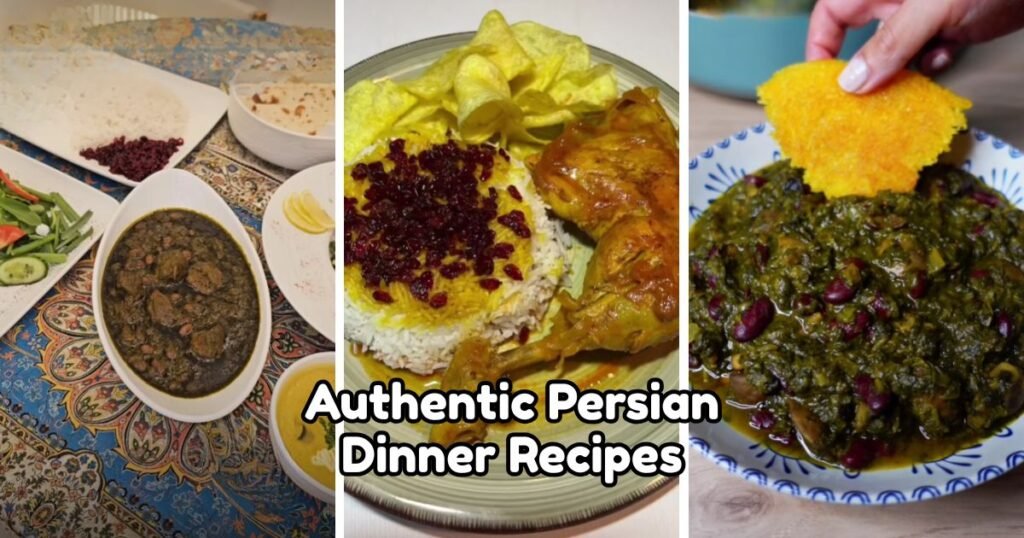
Persian food is one of the oldest and most loved cuisines in the world. From slow-cooked stews to fragrant rice dishes, Persian dinner recipes bring bold flavors, beautiful colors, and a warm sense of tradition to the table.
Persian cooking is built on a perfect balance of sweet, sour, and savory — something you rarely find in other cuisines. Dinner holds a very special place in Persian food culture. It is the meal where families come together, stories are shared, and no one leaves hungry.
At the heart of Persian cooking are signature ingredients like saffron, dried limes, pomegranate molasses, fresh herbs, and barberries.
These ingredients give every dish a deep, rich flavor that is hard to forget. Over the years, Persian dinner recipes have gained fans all over the world — and for good reason.
The food is hearty, fragrant, and made with so much care. Once you try it, you will want to cook it again and again.
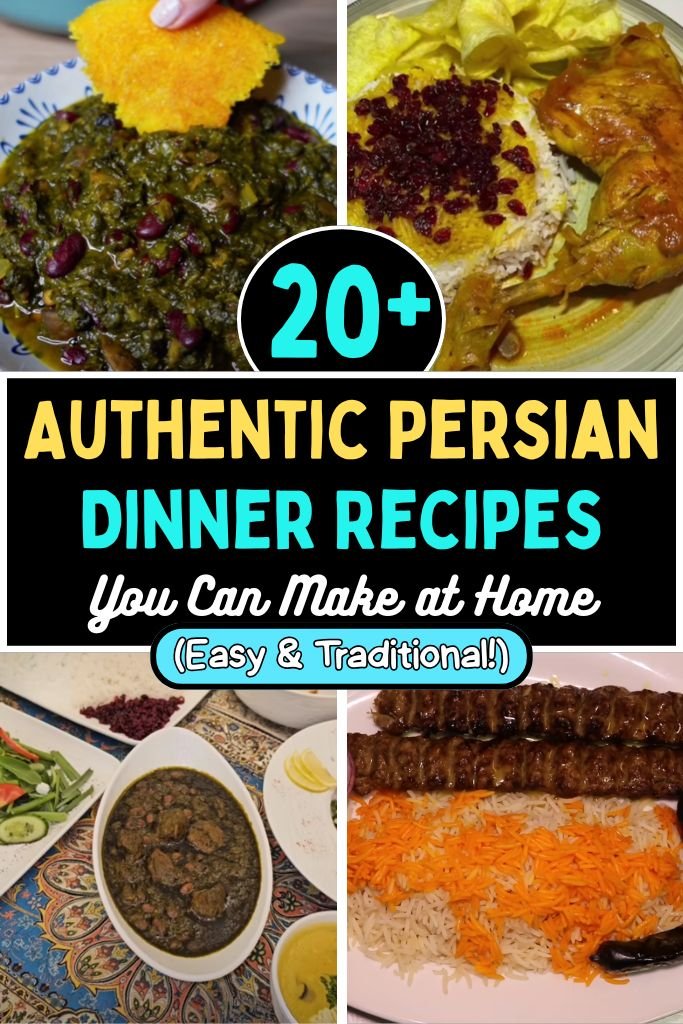
What Makes Persian Dinner Recipes Authentic?
1. The History of Traditional Persian Cuisine
Persian cuisine goes back more than 2,500 years, rooted in the ancient Persian Empire. Back then, royal kitchens used spices, dried fruits, and nuts in ways that were far ahead of their time. Many of the dishes eaten today — like pomegranate stew or herb rice — come from recipes that have been cooked for centuries. Food was always seen as an art form in Persian culture, and that respect for cooking still lives on in every home kitchen.
2. Regional Influences Across Iran
Iran is a large country with many different regions, and each one adds something special to the national food story. The north, near the Caspian Sea, is known for dishes made with fish, garlic, and fresh herbs. The south uses more spices and tamarind. Cities like Tabriz and Shiraz have their own unique rice dishes and stews. This regional variety is what makes Persian dinner recipes so rich and exciting — no two cities cook exactly the same way.
3. The Role of Rice, Herbs, and Saffron in Persian Cooking
Rice is the backbone of the Persian dinner table. It is washed, soaked, and steamed with great care to achieve the perfect fluffy texture and a crispy golden crust at the bottom called tahdig. Fresh herbs like parsley, fenugreek, coriander, and dill are used by the handful — not just as garnish, but as the main body of many dishes. Saffron is the crown jewel of Persian cooking. Just a pinch of it, bloomed in hot water, turns a plain dish into something golden and aromatic.
4. Traditional Cooking Techniques Passed Through Generations
Persian cooking is slow cooking. Stews simmer for hours on low heat so every ingredient can develop its full flavor. Rice is cooked in stages — first boiled, then steamed — to get that signature light and separate texture. Kebabs are marinated overnight in yogurt, saffron, and lemon before being grilled over charcoal. These techniques are passed down from grandmothers to mothers to daughters and sons, keeping the traditions alive in every generation.
1. Ghormeh Sabzi (Persian Herb Stew)
Prep Time: 30 minutes | Cook Time: 2.5 hours | Serves: 4–6
Ghormeh Sabzi is the king of Persian stews. Packed with sautéed herbs, kidney beans, and tender lamb, this dish has a deep, earthy flavor that gets better the longer it cooks. Dried limes give it a tangy punch that makes every bite totally satisfying — it is pure comfort food made with love.
Ingredients
- 500g (1.1 lb) boneless lamb shoulder or beef chuck, cut into 1-inch cubes
- 3 cups mixed fresh herbs (equal parts parsley, cilantro, fenugreek leaves, and chives)
- 1 cup dried kidney beans (soaked overnight) or 1 can, drained
- 2 medium onions, finely diced
- 3–4 dried Persian limes (limoo amani), pierced with a fork
- 3 tablespoons vegetable oil
- 1 teaspoon ground turmeric
- ½ teaspoon ground black pepper
- 1 teaspoon salt (adjust to taste)
- 2 cups water or broth
Instructions
Start by preparing the herbs, because this step is what gives Ghormeh Sabzi its signature deep green color and bold flavor. Wash all the fresh herbs very well under cold running water and pat them dry completely with a clean kitchen towel. Any extra moisture will cause them to steam instead of fry, which weakens the flavor. Chop the herbs finely. You want them to be small pieces — not a paste, but not chunky either.
Heat 2 tablespoons of vegetable oil in a large, heavy-bottomed pot over medium-high heat. Add the chopped herbs to the hot oil and spread them out evenly in the pot. Let them cook, stirring every few minutes, for about 20 to 25 minutes. You are looking for the herbs to darken significantly, turn very deep green, and release a rich, almost roasted aroma. This step is not one to rush — properly fried herbs are what separate a great Ghormeh Sabzi from a mediocre one. Once done, transfer the herbs to a bowl and set aside.
In the same pot, add the remaining tablespoon of oil over medium-high heat. Add the diced onions and cook them for 10 to 12 minutes, stirring often, until they are soft, translucent, and lightly golden on the edges. Add the turmeric and black pepper and stir well so the onions are fully coated in the spices. Let the spices cook with the onions for about 1 minute — this blooms the spices and deepens their flavor.
Add the meat cubes to the pot. Increase the heat slightly and brown the meat on all sides, turning every couple of minutes. This should take about 8 to 10 minutes total. Do not rush this step — browning the meat builds flavor. Once the meat is browned, stir in the sautéed herbs, the soaked and drained kidney beans, and the pierced dried limes. Pour in the water or broth and stir everything together gently.
Bring the pot to a gentle boil, then reduce the heat to low. Place a lid on the pot, leaving a small gap for steam to escape. Let the stew simmer on low heat for at least 2 hours, stirring every 30 minutes. The dried limes will soften and release their tangy, slightly bitter flavor into the broth. The meat should be completely tender and easy to pull apart with a fork. Taste and adjust salt as needed. The stew should taste rich, slightly sour, and deeply herby.
If the stew looks too thin after 2 hours, remove the lid and let it simmer uncovered for another 15 to 20 minutes to reduce. The final consistency should be thick and luscious — not watery.
Serving Suggestions
Serve Ghormeh Sabzi over steamed white Persian rice (chelo). Offer lemon wedges and plain yogurt on the side. Torshi (Persian pickles) make a great accompaniment.
2. Fesenjan (Pomegranate Walnut Chicken Stew)
Prep Time: 20 minutes | Cook Time: 1.5 hours | Serves: 4
Few stews in Persian cooking are as striking as Fesenjan. Made with ground walnuts and pomegranate molasses, this dark, glossy stew wraps around tender pieces of chicken with a sauce that is both nutty and tangy at the same time. The flavor is complex and warming — a true showstopper at any dinner table.
Ingredients
- 800g (1.75 lb) bone-in chicken thighs or drumsticks
- 2 cups (200g) raw walnut halves
- ½ cup pomegranate molasses
- 1 large onion, finely diced
- 2 tablespoons vegetable oil
- 1½ cups water or chicken broth
- 1 tablespoon sugar (adjust to taste)
- ½ teaspoon turmeric
- ½ teaspoon cinnamon
- Salt and black pepper to taste
Instructions
Begin by toasting and grinding the walnuts. Place the walnut halves in a dry skillet over medium heat. Toast them for 3 to 4 minutes, stirring constantly, until they smell nutty and are just starting to color. Watch them closely because they burn quickly. Once toasted, transfer them to a food processor and pulse until you get a fine, slightly oily crumb. Be careful not to over-process — you want a coarse powder, not a paste. Set the ground walnuts aside.
In a wide, heavy pot, heat the vegetable oil over medium-high heat. Season the chicken pieces with salt, pepper, and turmeric on all sides. Place the chicken skin-side down into the hot oil and brown it for 4 to 5 minutes without moving it. Flip and brown the other side for another 3 to 4 minutes. The goal is a golden-brown sear on the outside, not fully cooked chicken at this point. Remove the chicken and set it aside on a plate.
In the same pot, add the diced onion and cook it over medium heat for about 10 minutes until soft and lightly golden. Add the ground walnuts and stir them into the onions. Cook the walnut and onion mixture for 3 to 4 minutes, stirring constantly, to lightly toast the walnuts in the pot. This step helps develop a deeper, richer nutty flavor in the finished stew.
Pour in the pomegranate molasses and the water or chicken broth. Stir everything together well. Add the cinnamon and a pinch of sugar. Return the browned chicken pieces to the pot, nestling them into the sauce. The sauce should come about halfway up the chicken pieces.
Bring the pot to a gentle boil, then reduce heat to low. Cover with a lid and simmer for 45 minutes. After 45 minutes, taste the sauce. Persian Fesenjan should be a careful balance of sour and slightly sweet. Add more pomegranate molasses for more tang, or more sugar to round it out — adjust slowly and taste as you go.
Continue cooking for another 30 minutes uncovered, stirring occasionally. The sauce will thicken as it reduces, taking on a glossy, dark mahogany color. The chicken will be completely cooked through and tender. The finished sauce should coat the back of a spoon generously.
Serving Suggestions
Serve Fesenjan with plain white Persian rice or saffron rice. A dollop of plain yogurt on the side helps balance the richness of the walnut sauce. Pomegranate seeds scattered on top add a fresh, jewel-like finish.
3. Zereshk Polo ba Morgh (Barberry Rice with Chicken)
Prep Time: 30 minutes | Cook Time: 1.5 hours | Serves: 4–6
Zereshk Polo ba Morgh is one of the most beloved dishes in Persian cooking, served at celebrations and family dinners alike. Fluffy saffron rice is studded with tart red barberries and served alongside golden, tender chicken — it is as beautiful to look at as it is to eat.
Ingredients
For the chicken:
- 1 whole chicken (about 1.5kg), cut into pieces, or 6 bone-in thighs
- 1 large onion, grated or finely chopped
- 1 teaspoon turmeric
- ½ teaspoon ground saffron, bloomed in 3 tablespoons hot water
- Salt and black pepper
- 2 tablespoons vegetable oil
- 1 cup tomato paste (optional, for a richer sauce)
For the rice:
- 3 cups basmati rice, washed and soaked for 1 hour
- 1 cup dried barberries (zereshk), soaked in warm water for 10 minutes
- ½ teaspoon ground saffron, bloomed in 3 tablespoons hot water
- 3 tablespoons butter or oil
- 1 tablespoon sugar
- Salt
Instructions
Start with the chicken. In a large pot, heat the vegetable oil over medium heat and sauté the onion until golden and soft, about 12 minutes. Add the turmeric, salt, and black pepper and stir well. Add the chicken pieces and brown them on all sides, turning every few minutes for about 8 minutes total. Pour in enough water to just cover the chicken — about 1.5 to 2 cups. Add half of the bloomed saffron water and stir. Bring to a boil, then reduce heat to low, cover, and let the chicken simmer for 45 minutes to 1 hour until fully cooked and tender. Remove the chicken from the broth and set aside. Save the broth for serving.
While the chicken cooks, prepare the rice. Bring a large pot of generously salted water to a boil. Drain the soaked basmati rice and add it to the boiling water. Stir once gently. Boil the rice for exactly 6 to 7 minutes — you want the grains to be mostly cooked but still have a slight firmness in the center (al dente). Drain the rice through a fine colander and rinse briefly with cool water to stop the cooking.
To build the tahdig (crispy rice crust), place the pot back over medium heat and add 2 tablespoons of oil or butter. Once the oil is hot, add a thin layer of rice to cover the bottom of the pot completely. This will become the crust. Pile the remaining rice on top in a mound, building a pyramid shape. Use the handle of a wooden spoon to poke 5 or 6 deep holes through the rice to the bottom — these allow steam to escape and cook the rice evenly. Drizzle the remaining saffron water over the top of the rice. Place a clean kitchen towel under the lid and wrap it tightly — this absorbs steam and keeps the rice fluffy. Cook on medium heat for 10 minutes, then reduce to very low heat and cook for another 35 to 40 minutes.
For the barberries, drain the soaked barberries and pat them dry. Melt 1 tablespoon of butter in a small skillet over medium heat. Add the barberries and the sugar. Stir and cook for just 2 to 3 minutes — the sugar will caramelize slightly and coat the barberries. Remove from heat immediately to prevent burning.
To serve, fluff the top portion of the saffron rice onto a serving platter. Scatter the cooked barberries generously over the rice. Place the chicken alongside. Carefully flip the pot to release the golden tahdig crust and place it on a separate plate as the prized accompaniment.
Serving Suggestions
Serve with the reserved chicken broth in a small bowl for pouring over the rice. Mast-o-Khiar (yogurt with cucumber) and a fresh herb platter round out the meal perfectly.
4. Baghali Polo (Dill and Fava Bean Rice)
Prep Time: 25 minutes | Cook Time: 1 hour | Serves: 4–6
Baghali Polo is a fragrant Persian rice dish packed with fresh dill and buttery fava beans (or lima beans). It is most commonly paired with slow-braised lamb shank — the combination of the herby rice and rich, fall-off-the-bone meat is one of the great pairings in Persian cooking.
Ingredients
For the rice:
- 3 cups basmati rice, washed and soaked 1 hour
- 2 cups frozen fava beans or lima beans (thawed) or fresh, peeled fava beans
- 1 large bunch fresh dill, chopped (about 1.5 cups)
- 3 tablespoons butter or oil
- ½ teaspoon ground saffron, bloomed in 3 tablespoons hot water
- Salt
For the lamb shank (optional but recommended):
- 2 lamb shanks
- 1 onion, quartered
- 1 teaspoon turmeric
- 1 teaspoon cinnamon
- Salt, pepper
- 2 cups water
Instructions
If serving with lamb shank, start that first since it takes the longest. Season the lamb shanks all over with turmeric, cinnamon, salt, and pepper. In a heavy pot, heat a little oil over medium-high heat and sear the shanks on all sides until deeply browned, about 3 to 4 minutes per side. Add the quartered onion, pour in the water, and bring to a boil. Reduce heat to very low, cover tightly, and braise for 2 to 2.5 hours until the meat is completely tender and pulls away from the bone easily. Check occasionally and add small amounts of water if needed to prevent burning.
For the rice, bring a large pot of well-salted water to a vigorous boil. Drain the soaked basmati rice and add it to the boiling water. Cook for 6 minutes, until the grains are almost but not fully cooked. During the last 2 minutes of boiling, add the fava beans to the pot so they cook briefly alongside the rice. Drain everything together through a fine colander. Rinse with cool water.
In a bowl, gently mix the drained rice and beans with the chopped fresh dill. Be careful not to crush the rice grains — fold the dill in with a light hand so the grains stay intact and separate.
Heat 2 tablespoons of butter or oil in the empty rice pot over medium heat. Once hot and shimmering, add a thin layer of the rice and dill mixture to coat the bottom of the pot — this forms the tahdig crust. Pile the remaining rice in gently on top in a loose mound. Drizzle the saffron water over the top. Wrap the lid in a clean kitchen towel, place tightly on the pot, and cook on medium heat for 8 minutes. Reduce to the lowest heat your stove allows and continue cooking for 35 minutes more.
When ready, fluff the top layers of herby rice onto a platter. Place the braised lamb shank on top or alongside. Carefully flip the pot to release the crispy tahdig crust and serve on a separate plate.
Serving Suggestions
Pair with braised lamb shank, plain yogurt, and sliced radishes. A squeeze of fresh lemon over the lamb right before eating brightens the whole dish.
5. Tahchin (Persian Saffron Rice Cake)
Prep Time: 30 minutes + overnight marination | Cook Time: 1.5 hours | Serves: 6–8
Tahchin is a stunning Persian rice cake — layers of saffron-infused yogurt rice baked until golden and crispy on the outside, with juicy marinated chicken hidden inside. When flipped onto a platter, it reveals a glossy, deep golden crust that looks almost too beautiful to cut into. Almost.
Ingredients
- 3 cups basmati rice, washed and soaked 1 hour
- 600g (1.3 lb) boneless, skinless chicken thighs
- 1 cup thick plain yogurt (Greek or strained)
- 3 egg yolks
- 1 teaspoon ground saffron, bloomed in 4 tablespoons hot water
- 1 large onion, thinly sliced
- 3 tablespoons vegetable oil or butter
- 1 teaspoon turmeric
- Salt and black pepper
- Barberries or slivered almonds for garnish (optional)
Instructions
Begin the marinade the night before. Mix the yogurt, egg yolks, and half the bloomed saffron water in a large bowl. Season generously with salt and a pinch of black pepper. Stir until well combined and smooth. Cover and refrigerate overnight, or for at least 4 hours.
The next day, cook the chicken. Heat 1 tablespoon of oil in a pan over medium-high heat. Add the sliced onion and cook until golden brown and caramelized, about 15 minutes. Push the onion to the side and add the chicken thighs. Season with turmeric, salt, and pepper. Brown the chicken for 3 to 4 minutes per side, then pour in ½ cup of water. Reduce heat to low, cover, and cook for 20 to 25 minutes until the chicken is fully cooked through. Remove the chicken, let it cool slightly, then shred or cut into bite-sized strips. Add the cooked chicken and the remaining saffron water to the yogurt marinade and mix together.
Parboil the rice. Bring a large pot of salted water to a boil. Drain the soaked rice and add it to the boiling water. Cook for exactly 5 to 6 minutes — the rice should be mostly tender but still have a slight bite in the center. Drain and rinse with cool water.
Preheat your oven to 200°C (390°F). Add the parboiled rice to the yogurt and chicken mixture and stir very gently to coat all the grains without breaking them.
Generously grease the bottom and sides of a large oven-safe pot or Dutch oven with oil or butter. Add the rice mixture, pressing it down firmly and evenly with the back of a spoon or your hand. The mixture should be packed tightly so the cake holds its shape when flipped.
Cover the pot tightly with aluminum foil, then place the lid on top. Bake in the oven for 60 to 70 minutes. Remove the foil for the last 15 minutes to allow the crust to develop a deeper golden color.
Remove from the oven and let the pot rest for 10 minutes before unmolding. Run a butter knife along the inside edges of the pot. Place a large flat serving platter firmly over the pot and, in one confident motion, flip the pot upside down onto the platter. The Tahchin should release and slide out as one solid golden cake. If any edges stick, gently use a spatula to loosen them.
Scatter barberries or slivered almonds over the top for color and texture.
Serving Suggestions
Serve Tahchin as the star of the meal with a simple Shirazi salad and yogurt dip on the side. It also works beautifully alongside a light herb soup.
6. Koobideh Kebab (Persian Ground Meat Kebab)
Prep Time: 20 minutes + 1 hour chilling | Cook Time: 15–20 minutes | Serves: 4
Koobideh Kebab is the most iconic Persian kebab — long, flat cylinders of seasoned ground meat cooked over live fire until slightly charred on the outside and juicy on the inside. Getting the mixture right so it stays on the skewer takes a little practice, but the result is deeply rewarding and absolutely worth it.
Ingredients
- 500g (1.1 lb) ground lamb (or 250g lamb + 250g beef)
- 1 medium onion, grated and squeezed dry to remove excess liquid
- 1 teaspoon ground sumac
- ½ teaspoon turmeric
- ½ teaspoon black pepper
- 1 teaspoon salt
- ½ teaspoon baking soda (helps the meat bind)
- 2 tablespoons melted butter (for basting)
- Flat metal skewers (at least 1.5cm wide)
Instructions
Begin by preparing the onion. Grate the onion on the fine side of a box grater into a clean cloth or several layers of paper towel. Wrap it up and squeeze out as much liquid as you possibly can. Wet onion is the number one reason kebabs fall off the skewer, so be thorough. Press and squeeze until almost no liquid drips out when you squeeze the cloth firmly. Set the dry grated onion aside.
Place the ground meat in a large bowl. Add the squeezed onion, sumac, turmeric, black pepper, salt, and baking soda. Using your hands, mix and knead the meat mixture firmly and continuously for at least 5 to 7 full minutes. This is not gentle mixing — you want to really work the proteins in the meat so they become slightly sticky and hold together well. The mixture should feel dense and cohesive when you press a handful together. Cover the bowl with plastic wrap and refrigerate for at least 1 hour, or up to overnight.
When you are ready to grill, prepare your heat source. Traditional Koobideh is cooked over glowing charcoal for the best flavor, but a gas grill or broiler also works. The heat should be high.
To skewer the kebabs, wet your hands slightly with water to prevent sticking. Take a generous handful of the meat mixture — about 150 to 180 grams — and press it firmly around the flat metal skewer, squeezing and pressing it into a long, oval cylinder about 20 to 25 cm long. Press firmly along the length, making indentations with your fingers to create the classic ridged texture of Koobideh and to ensure the meat grips the skewer. Press both ends closed tightly. The kebab should be about 2.5 to 3 cm thick and completely sealed around the skewer.
Place the skewers over the high heat. Cook for 3 to 4 minutes per side without touching them — let them sear and firm up before turning. Once you can turn them without the meat sliding, rotate the skewers a quarter turn every 2 minutes to cook all four sides evenly. Baste generously with melted butter each time you turn them. Total cooking time is about 12 to 15 minutes. The outside should have visible charred ridges and the meat should be cooked through but still juicy inside — not dry.
Slide the kebabs off the skewers onto a bed of warm flatbread. The bread will absorb all the delicious meat juices.
Serving Suggestions
Serve Koobideh Kebab on warm lavash or sangak bread with grilled tomatoes, raw onion slices, fresh basil leaves, and a generous sprinkle of sumac. Persian rice and a simple salad complete the spread.
7. Joojeh Kebab (Persian Saffron Chicken Kebab)
Prep Time: 20 minutes + overnight marination | Cook Time: 20 minutes | Serves: 4
Joojeh Kebab is golden, tender, and packed with the unmistakable flavor of saffron and lemon. The chicken marinates overnight in a fragrant bath of saffron, yogurt, and citrus, which makes it incredibly juicy when grilled. Every bite carries that signature golden Persian color and bright, clean flavor.
Ingredients
- 1 whole chicken, cut into pieces (or 800g boneless chicken thighs)
- ½ cup thick plain yogurt
- Juice of 2 lemons (about 6 tablespoons)
- 1 teaspoon ground saffron, bloomed in 3 tablespoons hot water
- 1 large onion, grated and squeezed dry
- 2 tablespoons olive oil
- 1 teaspoon salt
- ½ teaspoon black pepper
Instructions
Prepare the marinade first, ideally the night before you plan to grill. In a large bowl, combine the yogurt, fresh lemon juice, bloomed saffron water, grated and squeezed onion, olive oil, salt, and black pepper. Whisk everything together until you have a smooth, pale golden marinade. The yogurt acts as a tenderizer, the lemon adds brightness, and the saffron gives the chicken its golden color and deep floral aroma.
Score the chicken pieces with a sharp knife — make 2 to 3 diagonal cuts through the skin and into the flesh on each piece. These cuts allow the marinade to penetrate deep into the meat rather than just coating the surface. Add the chicken pieces to the marinade and turn them over several times to make sure every surface is thoroughly coated. Press the marinade into the score marks with your fingers.
Cover the bowl tightly with plastic wrap and refrigerate overnight. At minimum, marinate for 4 hours, but overnight gives dramatically better results — the flavor goes all the way through the meat.
When ready to cook, remove the chicken from the refrigerator and let it come to room temperature for about 20 minutes. This helps the chicken cook more evenly and prevents the outside from burning before the inside is done.
Prepare your grill for high, direct heat. For bone-in pieces, start with indirect heat first. Thread the chicken pieces onto metal skewers or place them directly on the grill grates. Start by grilling over medium-high heat, skin side down. Grill without disturbing for 5 to 6 minutes until the skin is golden and the chicken releases easily from the grill. Turn and grill the other side for another 5 minutes.
Move the chicken to a slightly cooler part of the grill (or reduce heat) and continue cooking for 10 to 15 more minutes depending on the size of the pieces. Baste with any leftover marinade during the cooking process — this keeps the chicken moist and adds an extra layer of the saffron flavor on the outside. The chicken is done when juices run completely clear when pierced at the thickest part, and the internal temperature reads 74°C (165°F).
For the last 2 minutes, increase the heat to high and let the outside char slightly for that classic kebab char that adds another layer of flavor.
Serving Suggestions
Serve Joojeh Kebab over warm saffron rice with grilled cherry tomatoes, lemon wedges, and fresh herbs. Mast-o-Khiar (yogurt and cucumber) on the side is a classic pairing.
8. Khoresht Gheymeh (Split Pea and Beef Stew)
Prep Time: 20 minutes | Cook Time: 2 hours | Serves: 4–6
Khoresht Gheymeh is a rich, tangy Persian stew made with tender beef, yellow split peas, and dried limes — all topped with thin, crispy fried potato slices that add a beautiful crunch. The combination of the thick, savory stew and the crunchy potatoes on top is something truly special.
Ingredients
- 500g (1.1 lb) beef chuck, cut into small cubes
- 1 cup yellow split peas, soaked for 30 minutes
- 2 large onions, finely diced
- 3 dried Persian limes (limoo amani), pierced
- 3 tablespoons tomato paste
- 1 teaspoon turmeric
- ½ teaspoon cinnamon
- ½ teaspoon ground saffron, bloomed in 2 tablespoons hot water
- Salt and black pepper
- 3 tablespoons vegetable oil
- 2 medium potatoes, peeled and cut into thin matchsticks, for frying
- Oil for frying potatoes
Instructions
Heat the vegetable oil in a large, heavy pot over medium-high heat. Add the diced onions and cook them, stirring regularly, for 12 to 15 minutes until they are deeply golden and caramelized. The onions should be a rich amber color — this level of caramelization adds a sweetness and depth to the stew that lighter-cooked onions simply cannot deliver.
Add the turmeric and cinnamon to the onions and stir for 30 seconds. Add the beef cubes and increase the heat to high. Brown the beef on all sides, stirring occasionally, for about 8 minutes. Once the beef is browned, stir in the tomato paste and cook for another 2 minutes, stirring constantly. The tomato paste should darken slightly and smell rich and slightly caramelized.
Pour in enough water to cover the meat by about 3 cm (roughly 2 to 2.5 cups). Add the pierced dried limes and the saffron water. Bring to a boil, then reduce heat to low, cover, and simmer for 45 minutes.
Drain the soaked split peas and add them to the pot. Stir gently and continue simmering, covered, for another 45 minutes to 1 hour. The split peas should be very soft and mostly dissolved into the sauce, thickening it naturally. Stir occasionally and check that the liquid level stays adequate — add small amounts of hot water if the stew looks too thick during cooking. Season well with salt and black pepper.
While the stew finishes, fry the potato matchsticks. Heat about 2 cm of oil in a frying pan over medium-high heat. Once the oil is hot, add the potato sticks in small batches — do not overcrowd the pan. Fry for 4 to 5 minutes per batch, turning occasionally, until they are golden and crispy. Drain on paper towels and season lightly with salt.
To serve, ladle the Gheymeh stew into a serving bowl or directly onto a platter of rice. Pile the crispy fried potato matchsticks generously on top.
Serving Suggestions
Serve over steamed white rice with a side of Shirazi salad and torshi (Persian pickles) for a complete meal. The crunch of the potatoes against the rich stew is the highlight.
9. Albaloo Polo (Sour Cherry Rice)
Prep Time: 20 minutes | Cook Time: 1 hour | Serves: 4–6
Albaloo Polo is one of the most elegant Persian rice dishes — fragrant basmati rice layered with sour cherries that have been cooked with a touch of sugar into a glossy, ruby-red compote. The result is a stunning dish that balances sweet and sour in every mouthful, often served alongside rich braised meat or meatballs.
Ingredients
- 3 cups basmati rice, washed and soaked 1 hour
- 2 cups pitted sour cherries (fresh, frozen, or jarred — drained well if jarred)
- 3 tablespoons sugar (adjust to taste depending on cherry tartness)
- 3 tablespoons butter
- ½ teaspoon ground saffron, bloomed in 3 tablespoons hot water
- Salt
- Oil for tahdig
Instructions
Begin by making the cherry compote. Place the pitted sour cherries and sugar in a small saucepan over medium heat. Stir the mixture as it heats up. The cherries will release their juices quickly and the mixture will become quite liquid. Cook on medium heat, stirring often, for about 10 to 12 minutes until the juice reduces by about half and the mixture becomes syrupy and glossy. Taste and adjust sugar — the compote should be pleasantly tart with just enough sweetness to balance it. Remove from heat and set aside.
Parboil the rice. Bring a large pot of generously salted water to a rolling boil. Drain the soaked basmati rice and add it to the boiling water. Cook for exactly 6 minutes, then drain through a fine colander. Rinse quickly with cool water to stop the cooking and keep the grains separate.
Place the empty rice pot back over medium heat and add 2 tablespoons of butter. Once the butter melts and starts to sizzle, add a thin, even layer of rice to coat the bottom of the pot — this becomes the tahdig. Now build the rice in layers: add a layer of plain rice, then spoon several spoonfuls of the cherry compote over it. Continue alternating layers of rice and cherry compote, finishing with a final layer of plain rice on top. Drizzle the bloomed saffron water over the top layer. Dot the remaining butter over the surface.
Wrap the lid in a clean kitchen towel, press it tightly onto the pot, and cook on medium heat for 10 minutes. Then reduce the heat to the lowest setting possible and cook for another 35 to 40 minutes. The kitchen will fill with an incredible sweet-tart aroma.
To serve, fluff the top saffron-golden layer onto a serving platter first. Spoon the cherry layers over the rice as you reveal them. Carefully flip the pot to unmold the golden tahdig crust onto a separate plate.
Serving Suggestions
Albaloo Polo pairs beautifully with Persian meatballs (kofteh), braised lamb, or Koobideh Kebab. Serve with plain yogurt on the side to contrast the sweet-sour cherries.
10. Lubia Polo (Green Bean Rice)
Prep Time: 20 minutes | Cook Time: 1.5 hours | Serves: 4–6
Lubia Polo is a hearty one-dish Persian meal where green beans and ground beef are cooked together with warm spices and then layered through fragrant basmati rice. The spiced meat sauce seeps through the rice as it steams, creating layers of deeply savory, aromatic flavors in every serving.
Ingredients
- 3 cups basmati rice, soaked for 1 hour
- 300g (10 oz) green beans, trimmed and cut into 3 cm pieces
- 300g (10 oz) ground beef or lamb
- 1 large onion, finely diced
- 3 tablespoons tomato paste
- 1 teaspoon turmeric
- 1 teaspoon cinnamon
- ½ teaspoon cumin
- ½ teaspoon black pepper
- Salt to taste
- 3 tablespoons vegetable oil
- ½ teaspoon saffron, bloomed in 2 tablespoons hot water
Instructions
Heat 2 tablespoons of oil in a wide skillet over medium-high heat. Add the diced onion and cook for 10 to 12 minutes until soft and lightly golden. Add the turmeric, cinnamon, cumin, and black pepper, stir well for 30 seconds, then add the ground meat. Break the meat apart with a wooden spoon and cook, stirring regularly, for about 8 minutes until the meat is fully browned and no pink remains.
Stir in the tomato paste and cook for 2 minutes more, stirring constantly, until the paste darkens. Add the green bean pieces to the pan, pour in ½ cup of water, and stir everything together. Cover the pan and cook on low heat for 15 minutes until the green beans are tender and the sauce has reduced to a thick, glossy consistency that coats the beans and meat. Season with salt and set aside.
Parboil the rice. Bring a large pot of well-salted water to a boil. Drain the soaked rice and add it to the boiling water. Cook for 6 minutes, drain, and rinse with cool water.
Place the empty pot back on medium heat with 1 tablespoon of oil. Add a thin layer of rice to the bottom. Now layer the rice and the meat and green bean mixture alternately — a layer of rice, then a layer of the meat mixture, then rice, then meat — until everything is used, finishing with rice on top. Pour the saffron water over the top.
Cover with a towel-wrapped lid and cook on medium for 10 minutes, then reduce to very low heat and cook for 40 minutes. The flavors from the meat sauce will steam through all the rice layers, infusing every grain with the warm spice flavors.
Serving Suggestions
Serve Lubia Polo directly from the pot, flipping the tahdig onto a plate separately. A simple cucumber and tomato salad and plain yogurt alongside are all this dish needs.
11. Adas Polo (Persian Lentil Rice)
Prep Time: 20 minutes | Cook Time: 1 hour | Serves: 4–6
Adas Polo is a comforting, nourishing Persian dish where lentils are cooked together with rice and layered with sweet caramelized onions, plump raisins, and medjool dates. The combination of savory lentils with sweet dried fruit sounds unusual but works beautifully — it is warm, filling, and deeply satisfying.
Ingredients
- 3 cups basmati rice, soaked 1 hour
- 1 cup green or brown lentils, rinsed
- 1 large onion, thinly sliced into half-moons
- ½ cup raisins
- ½ cup pitted dates, roughly chopped
- 3 tablespoons butter or oil
- 1 teaspoon turmeric
- ½ teaspoon cinnamon
- Salt to taste
- ½ teaspoon saffron bloomed in 2 tablespoons hot water
Instructions
Cook the lentils first. Place them in a small saucepan, cover generously with water, and bring to a boil. Reduce heat and simmer for 15 to 20 minutes — you want them mostly cooked but still slightly firm. They will finish cooking inside the rice pot. Drain and set aside.
Make the caramelized onion topping. Heat 2 tablespoons of butter or oil in a skillet over medium-low heat. Add the sliced onion and cook very slowly, stirring every few minutes, for 25 to 30 minutes. The onion should turn from raw and sharp to soft, golden, and sweet. Do not rush with high heat — the slow caramelization is what develops the deep sweetness. During the last 5 minutes of cooking, add the raisins and chopped dates to the pan. Stir them in and let them warm through and plump up in the butter. The raisins will become soft and glossy. Remove from heat and set aside.
Parboil the rice. Bring a large pot of well-salted water to a rolling boil. Drain the soaked rice and add it. Cook for 5 to 6 minutes, then drain and rinse.
In a bowl, gently fold the drained lentils and half the caramelized onion, raisin, and date mixture into the drained rice. Be gentle to keep the rice grains intact.
Set the pot back over medium heat with 1 tablespoon of butter. Add a thin layer of plain rice to the bottom to form the tahdig. Add the lentil and rice mixture on top in a mound. Drizzle the saffron water over the top. Cover with a towel-wrapped lid and steam on medium for 10 minutes, then very low for 35 minutes.
Serve topped with the remaining caramelized onion, raisin, and date mixture.
Serving Suggestions
Adas Polo is traditionally served with fried or roasted chicken. Plain yogurt with a drizzle of honey is a wonderful accompaniment to balance the sweet-savory notes.
12. Kalam Polo (Shiraz Cabbage Rice)
Prep Time: 25 minutes | Cook Time: 1.5 hours | Serves: 4–6
Kalam Polo comes from the beautiful city of Shiraz in southern Iran. Shredded cabbage and spiced ground meat are mixed through fragrant basmati rice, creating a dish with a unique texture and a warming blend of spices that includes cinnamon, cumin, and dried limes — flavors that are characteristic of southern Persian cooking.
Ingredients
- 3 cups basmati rice, soaked 1 hour
- ½ head green cabbage, shredded finely (about 4 cups)
- 300g (10 oz) ground beef or lamb
- 1 large onion, diced
- 2 dried Persian limes, pierced and broken into pieces
- 1 teaspoon turmeric
- 1 teaspoon cinnamon
- ½ teaspoon cumin
- ½ teaspoon ground black pepper
- 2 tablespoons tomato paste
- Salt to taste
- 3 tablespoons oil
- ½ teaspoon saffron, bloomed in 2 tablespoons hot water
Instructions
Heat 2 tablespoons of oil in a large skillet over medium-high heat. Add the diced onion and cook until golden, about 10 minutes. Add the ground meat and break it apart, cooking until fully browned, about 8 minutes. Add turmeric, cinnamon, cumin, and black pepper. Stir in the tomato paste and cook for 2 minutes. Add the shredded cabbage to the pan and stir to combine with the meat. The cabbage will seem like a lot but it will reduce significantly as it cooks. Add the broken dried lime pieces and ½ cup of water. Cover and cook on medium-low for 15 to 20 minutes, stirring occasionally, until the cabbage is soft and has absorbed the spiced meat juices. The mixture should be moist but not watery. Season with salt.
Parboil the rice in well-salted boiling water for 6 minutes, then drain and rinse with cool water.
In the empty pot over medium heat, add 1 tablespoon of oil. Layer plain rice on the bottom for tahdig. Then alternately layer the rice and the cabbage-meat mixture in the pot, finishing with a rice layer on top. Pour the saffron water over the top. Cover with a towel-wrapped lid and cook on medium for 10 minutes, then very low for 35 to 40 minutes.
Serve by flipping the tahdig out separately and bringing the full pot to the table so everyone can serve themselves.
Serving Suggestions
Kalam Polo pairs wonderfully with Mast-o-Khiar and a simple green salad. Some families serve it with plain yogurt mixed with dried mint.
13. Kashke Bademjan (Eggplant and Whey Dip)
Prep Time: 20 minutes | Cook Time: 45 minutes | Serves: 4–6 as a side
Kashke Bademjan is a smoky, creamy Persian eggplant dish made with roasted or fried eggplant blended with kashk (a thick fermented whey) and finished with caramelized onions, crispy mint, and walnuts. Served warm with bread, it is one of the most beloved Persian side dishes — rich, tangy, and completely addictive.
Ingredients
- 3 large eggplants (aubergines)
- ½ cup kashk (fermented whey) — or substitute thick sour cream for a milder version
- 1 large onion, thinly sliced
- 3 cloves garlic, minced
- ½ cup chopped walnuts
- 1 teaspoon dried mint
- 1 teaspoon turmeric
- Salt and black pepper
- 4 tablespoons vegetable oil
Instructions
Roast the eggplants first for the best smoky flavor. Place whole eggplants directly over a gas flame on your stovetop, turning them with tongs every 3 to 4 minutes until the skin is completely charred and the eggplant is collapsed and soft inside — about 15 to 20 minutes total. Alternatively, place them on a baking sheet and broil in the oven, turning occasionally, until fully charred. Place the charred eggplants in a colander over the sink and let them cool for 10 minutes. Once cool enough to handle, peel away all the charred skin. The inside should be soft, smoky, and almost silky. Chop the eggplant flesh roughly and press it gently in the colander to remove excess liquid.
Heat 2 tablespoons of oil in a large skillet over medium heat. Add the sliced onion and cook slowly for 20 to 25 minutes until deeply caramelized and golden brown. Remove half the onion and reserve it for garnish. To the remaining onion in the pan, add the garlic and cook for 1 minute. Add the turmeric and stir. Add the chopped eggplant to the pan, season with salt and pepper, and cook everything together for 5 to 8 minutes, pressing and stirring the eggplant so it breaks down further and blends with the onion and spices.
Remove from heat. Stir in most of the kashk, reserving a few spoonfuls for drizzling on top. Mix well. The kashk will add creaminess and a distinctive tangy fermented flavor that is the backbone of this dish. Transfer to a serving bowl.
In a small pan, heat 1 tablespoon of oil and fry the dried mint for just 30 seconds until it sizzles and becomes fragrant — watch carefully as it burns easily. Toast the walnuts briefly in the same pan.
Drizzle the remaining kashk over the top of the Bademjan. Top with the reserved caramelized onion, the fried mint, and the toasted walnuts.
Serving Suggestions
Serve warm with warm flatbread (lavash or sangak) for scooping. Kashke Bademjan also works beautifully as part of a meze spread alongside other Persian dips and salads.
14. Mirza Ghasemi (Smoked Eggplant and Tomato Dish)
Prep Time: 15 minutes | Cook Time: 30 minutes | Serves: 4
Mirza Ghasemi is a Northern Iranian specialty from the Gilan province along the Caspian Sea coast. Charred eggplant is mixed with tomatoes, garlic, and eggs to create a smoky, rustic dish that can be served as an appetizer, side dish, or even a light main over rice. The combination of the smoky eggplant and rich eggs is deeply comforting.
Ingredients
- 2 large eggplants
- 3 medium tomatoes, chopped (or 1 cup canned crushed tomatoes)
- 4 cloves garlic, minced
- 2 eggs
- 1 teaspoon turmeric
- ½ teaspoon black pepper
- Salt to taste
- 3 tablespoons vegetable oil or butter
Instructions
Char the eggplants using the same method as Kashke Bademjan — either directly over a gas flame or under the broiler, turning until the skin is completely blackened and the interior is completely soft and collapsed. This step creates the essential smoky flavor that defines this dish. Let the charred eggplants cool in a colander, peel away all the skin, and chop the flesh roughly. Press gently to drain excess moisture.
Heat the oil or butter in a wide skillet over medium heat. Add the minced garlic and cook, stirring, for about 1 minute until fragrant but not browned. Add the turmeric and stir to coat. Add the chopped tomatoes to the pan. Cook on medium heat for 10 to 12 minutes, pressing the tomatoes down and stirring often, until they completely break down into a thick, concentrated sauce. The mixture should reduce significantly and look almost like a tomato paste at this point — deep red and very little liquid remaining.
Add the chopped eggplant to the pan. Use a wooden spoon or fork to mash and mix the eggplant into the tomato sauce, breaking it down into a rough, textured consistency. Season generously with salt and black pepper. Cook the mixture together for another 5 minutes, stirring often, so the eggplant and tomato fully combine and any remaining moisture evaporates.
Create 2 small wells in the mixture using the back of your spoon. Crack one egg into each well. Let the whites begin to set for about 2 minutes, then use a fork to lightly scramble the eggs into the eggplant mixture — you want streaks of egg throughout rather than fully incorporated. Cook for another 2 to 3 minutes until the eggs are just cooked through. The dish should look rough and rustic — not smooth.
Serving Suggestions
Serve Mirza Ghasemi warm with fresh flatbread for scooping. It works as an appetizer, a side alongside rice dishes, or as a light breakfast-style dish.
15. Baghali Ghatogh (Northern Persian Bean Stew)
Prep Time: 15 minutes | Cook Time: 30 minutes | Serves: 4
Baghali Ghatogh is another gem from the lush northern coast of Iran. Fava beans (or lima beans) are cooked with garlic, eggs, and fresh dill in a simple but intensely flavored stew that smells incredible. It comes together quickly and is deeply comforting — one of those dishes that feels both humble and special at the same time.
Ingredients
- 2 cups frozen fava beans or lima beans (thawed), or fresh shelled fava beans
- 4 cloves garlic, minced
- 1 large bunch fresh dill, chopped (about 1 cup)
- 3 eggs
- 1 teaspoon turmeric
- ½ teaspoon black pepper
- Salt to taste
- 3 tablespoons vegetable oil or butter
- ½ cup water
Instructions
Heat the oil or butter in a medium skillet or wide saucepan over medium heat. Add the minced garlic and cook for about 1 minute, stirring constantly, until fragrant. Do not let the garlic brown — it should be soft and golden, smelling sweet and nutty. Add the turmeric and black pepper and stir for 30 seconds to cook the spices into the oil.
Add the fava beans to the pan and stir to coat them in the garlic and spice mixture. Pour in the water. Bring to a light simmer, then cover and cook on medium-low heat for 10 to 12 minutes until the beans are tender and the water has mostly been absorbed. The beans should be soft and creamy throughout, not hard or starchy.
Add the fresh dill to the pan. Stir it through the beans generously — do not hold back on the dill, it is the defining flavor of this dish and you want it everywhere. Cook for another 2 minutes. Season well with salt.
Create 3 small wells in the bean and dill mixture. Crack one egg into each well. Place a lid on the pan and cook over low heat for 3 to 4 minutes until the egg whites are set but the yolks are still soft — almost like a Persian shakshuka. If you prefer firmer yolks, cook for an extra 1 to 2 minutes. The dish is finished when the eggs are set to your liking and the dill has wilted beautifully into the beans.
Taste the final dish and adjust salt. The stew should taste of garlic, fresh dill, and a gentle earthiness from the beans — bright, green, and nourishing.
Serving Suggestions
Serve Baghali Ghatogh in the pan it was cooked in, with plenty of warm flatbread. Alongside steamed rice it makes a complete and satisfying meal. Add a dollop of plain yogurt on top for a cooling contrast.
16. Ash Reshteh (Persian Noodle and Herb Soup)
Prep Time: 30 minutes | Cook Time: 1.5 hours | Serves: 6–8
Ash Reshteh is the most beloved Persian soup — a thick, hearty broth packed with multiple types of legumes, fresh herbs, and flat Persian noodles, finished with a generous pour of kashk, fried onions, and crispy dried mint. Traditionally made at the Persian New Year and during important occasions, this soup is nourishing, warming, and full of depth.
Ingredients
- 200g Persian reshteh noodles (or wide flat egg noodles, broken into pieces)
- 1 cup cooked chickpeas (canned, drained)
- 1 cup cooked kidney beans (canned, drained)
- ½ cup green lentils
- 2 large bunches mixed fresh herbs: spinach, flat-leaf parsley, cilantro, and fenugreek leaves (about 6 cups chopped total)
- 2 large onions — 1 for the soup, 1 for topping
- 4 cloves garlic
- 1 teaspoon turmeric
- 1 teaspoon dried fenugreek (methi)
- ½ cup kashk (fermented whey) or thick sour cream
- 1 teaspoon dried mint
- Salt and black pepper
- 4 tablespoons vegetable oil
Instructions
Heat 2 tablespoons of oil in a large, heavy soup pot over medium heat. Dice one onion and add it to the pot. Cook, stirring occasionally, for 12 to 15 minutes until golden and soft. Add the garlic and cook for 1 minute more. Add the turmeric and dried fenugreek leaves and stir to combine. Add the green lentils to the pot and pour in 8 cups of water. Bring to a boil, then reduce heat to medium-low, cover, and cook for 25 minutes until the lentils are mostly tender.
While the lentils cook, slice the second onion into thin rings. Heat the remaining oil in a separate skillet over medium heat and fry the onion rings, stirring regularly, for 20 to 25 minutes until they are deeply caramelized and turning crispy. Remove and drain on paper towels — these go on top at the end.
Add the chopped fresh herbs to the soup pot. Stir them in — they will seem like an enormous amount but will wilt down significantly. Add the chickpeas and kidney beans. Season generously with salt and pepper. Continue simmering on medium-low heat for 20 minutes, stirring occasionally.
Add the reshteh noodles to the pot and stir. The noodles will absorb liquid quickly and the soup will thicken considerably. Add more hot water if the soup becomes too thick — Ash Reshteh should be thick but still pourable, not paste-like. Cook the noodles for 10 to 15 minutes until completely soft and the soup has the consistency of a very hearty, thick potage.
Stir in half the kashk and mix well. Taste and adjust salt. To finish, heat a little oil in a small pan and fry the dried mint for 30 seconds until fragrant and crispy — watch carefully.
To serve, ladle the thick soup into bowls. Drizzle kashk generously on top, followed by the crispy fried onions and the fried mint oil.
Serving Suggestions
Ash Reshteh is a complete meal on its own with warm bread. Serve with extra kashk on the side for those who want more. A small dish of torshi (Persian pickles) alongside cuts through the richness beautifully.
17. Sabzi Polo ba Mahi (Herb Rice with Fish)
Prep Time: 30 minutes | Cook Time: 1 hour | Serves: 4–6
Sabzi Polo ba Mahi is the traditional Persian New Year dish — fragrant herb rice paired with perfectly fried or baked white fish. The clean freshness of the herby rice contrasts beautifully with the crispy, golden fish — it is celebratory, light, and elegant, yet simple enough to make any night of the week.
Ingredients
For the herb rice:
- 3 cups basmati rice, soaked 1 hour
- 2 cups fresh mixed herbs, finely chopped: flat-leaf parsley, cilantro, dill, and fenugreek leaves (fenugreek is essential for the authentic flavor)
- 3 tablespoons butter or oil
- ½ teaspoon saffron, bloomed in 2 tablespoons hot water
- Salt
For the fish:
- 4 white fish fillets (such as cod, tilapia, or sea bass)
- 1 teaspoon turmeric
- ½ teaspoon garlic powder
- Salt and black pepper
- 2 tablespoons flour (for light dusting)
- Oil for frying
Instructions
Prepare the herb rice first. Bring a large pot of well-salted water to a boil. Drain the soaked basmati rice and add to the boiling water. Cook for 6 minutes, then drain and rinse. In a large bowl, gently toss the drained rice with the chopped mixed herbs. The herbs should be evenly distributed throughout the rice without clumping.
Set the pot over medium heat with 2 tablespoons of butter or oil. Once hot, add a thin layer of the herb rice to the bottom to form the tahdig. Mound the remaining herb rice on top in a pyramid. Drizzle the saffron water over the top. Cover with a towel-wrapped lid and cook on medium heat for 10 minutes. Reduce to very low heat and steam for 35 to 40 minutes. The bottom layer will turn into a stunning golden-green tahdig.
While the rice steams, prepare the fish. Pat the fish fillets completely dry with paper towels — this is important for achieving a crispy crust. Season both sides generously with turmeric, garlic powder, salt, and black pepper. Dust each fillet lightly with flour on both sides, shaking off any excess. The flour creates a thin coating that fries to a golden crust.
Heat about 0.5 cm of oil in a large skillet over medium-high heat until shimmering hot. Carefully lay the fish fillets in the pan, presentation side down. Cook without touching for 3 to 4 minutes until the bottom is deeply golden and the fillet releases easily from the pan. Flip carefully with a thin spatula and cook the other side for another 2 to 3 minutes until cooked through. The fish should be opaque throughout and flake easily when pressed gently.
To serve, mound the herby green rice onto a large platter. Lay the fried fish fillets alongside or on top of the rice. Flip the tahdig out separately and present on its own plate.
Serving Suggestions
Serve with lemon wedges, garlic yogurt sauce, and Sabzi Khordan (fresh herb platter). This dish needs nothing more — the herbs in the rice and on the platter do all the work.
18. Morasa Polo (Persian Jeweled Rice)
Prep Time: 40 minutes | Cook Time: 1 hour | Serves: 6–8
Morasa Polo — literally “jeweled rice” — is the crown of Persian celebration cooking. Saffron-golden rice is adorned with slivered pistachios, almonds, barberries, candied orange peel, carrots, and dried fruits, creating a dish that looks as precious as gems. Served at weddings and grand celebrations, this is Persian food at its most festive and beautiful.
Ingredients
For the rice:
- 4 cups basmati rice, soaked 1 hour
- ½ teaspoon saffron, bloomed in 4 tablespoons hot water
- 4 tablespoons butter
- Salt
For the jewels:
- ½ cup dried barberries (zereshk), soaked and drained
- ½ cup slivered pistachios
- ½ cup slivered almonds
- ½ cup orange peel, cut into thin strips and blanched twice to remove bitterness
- 2 medium carrots, julienned (cut into thin matchsticks)
- ½ cup raisins
- 3 tablespoons sugar
- 2 tablespoons butter
- ½ teaspoon cardamom
- ½ teaspoon cinnamon
Instructions
Start by preparing each “jewel” component separately so you can control each flavor individually.
Blanch the orange peel strips in boiling water for 3 minutes, drain, repeat once more with fresh water to reduce bitterness significantly. Drain and set aside.
In a small saucepan, melt 1 tablespoon of butter over medium heat. Add the julienned carrots and cook for 3 to 4 minutes until slightly soft. Add half the sugar, stir, and cook for another 2 minutes until the carrots are glossy and lightly caramelized. Remove and set aside.
In the same pan, add the blanched orange peel strips with the remaining sugar and a splash of water. Cook for 3 to 4 minutes until the orange peel is tender and glossy. Remove and set aside.
In another small pan, melt 1 tablespoon of butter and add the drained barberries and raisins. Cook for 1 to 2 minutes until they plump up and become glossy. Sprinkle with cardamom. Remove from heat.
Toast the slivered pistachios and almonds in a dry pan over medium heat for 2 to 3 minutes until just golden. Set aside.
Now cook the rice. Parboil the soaked, drained rice in well-salted boiling water for 6 minutes. Drain and rinse. Place the pot back over medium heat with 2 tablespoons of butter. Add a plain rice layer to the bottom for tahdig. Add the remaining rice in a mound, drizzle all the saffron water over the top, dot with remaining butter, cover with a towel-wrapped lid, and steam on medium for 10 minutes then very low for 35 minutes.
To assemble, place the saffron-golden rice on a large platter. Arrange the jewels across the surface decoratively — scatter the barberries and raisins, the orange peel strips, the caramelized carrots, and the toasted nuts over the rice in an abundant, generous pattern. Finish with a dusting of cinnamon.
Serving Suggestions
Morasa Polo is traditionally served with roasted chicken or lamb. The sweetness of the jeweled toppings pairs beautifully with savory roasted meat. Serve at celebrations and let the beauty of the dish speak for itself.
19. Kofteh Tabrizi (Persian Stuffed Meatballs)
Prep Time: 45 minutes | Cook Time: 1 hour | Serves: 4–6
Kofteh Tabrizi are extraordinary Persian stuffed meatballs from the city of Tabriz in northwestern Iran. Each meatball is large — the size of an orange — and hidden inside is a treasure of hard-boiled eggs, fried onions, prunes, and nuts. They cook in a golden saffron and tomato broth and arrive at the table as an impressive, theatrical dish.
Ingredients
For the meatballs:
- 500g (1.1 lb) ground lamb or beef
- ½ cup cooked yellow split peas
- ½ cup cooked rice
- 1 large onion, grated and squeezed dry
- 2 eggs (raw, for the meatball mixture)
- 1 teaspoon turmeric
- ½ teaspoon cinnamon
- ½ teaspoon dried herbs (parsley or fenugreek)
- Salt and black pepper
For the filling:
- 2 small hard-boiled eggs, peeled
- 2 tablespoons fried onion
- 4 prunes or dried apricots
- 2 tablespoons chopped walnuts
- 2 tablespoons raisins
For the broth:
- 2 tablespoons tomato paste
- ½ teaspoon saffron, bloomed in 2 tablespoons hot water
- 1 tablespoon lemon juice
- Salt and pepper
- 3 cups water or broth
Instructions
Begin by making the meatball mixture. Combine the ground meat, cooked and cooled split peas, cooked and cooled rice, grated-and-squeezed onion, raw eggs, turmeric, cinnamon, dried herbs, salt, and pepper in a large bowl. Knead everything together firmly and thoroughly for at least 7 to 8 minutes. The mixture needs to be very cohesive and somewhat sticky so the large meatballs hold together during their long cooking time. If the mixture feels too loose, add a small amount of breadcrumbs. Refrigerate the mixture for 30 minutes.
Prepare the filling ingredients: have the hard-boiled eggs, prunes, walnuts, raisins, and fried onion all ready in a bowl.
Divide the meatball mixture into 2 to 4 equal portions depending on how large you want each meatball. Wet your hands with water. Take one portion and flatten it in your palm into a thick disc shape. Place one hard-boiled egg in the center, surrounded by prunes, walnuts, raisins, and fried onion. Carefully close the meat mixture up and around the filling, sealing it completely and pressing firmly into a large smooth ball. The meatball should be completely enclosed with no filling visible and no cracks in the surface. Repeat with remaining portions.
Make the broth. In a wide pot large enough to hold all the meatballs in one layer, combine the tomato paste, saffron water, lemon juice, water or broth, salt, and pepper. Stir together and bring to a gentle simmer over medium heat. Carefully lower the large meatballs into the simmering broth — they should be about half submerged. Baste the tops of the meatballs with the broth using a spoon.
Cover the pot and cook on medium-low heat for 45 to 55 minutes, basting every 10 minutes and turning the meatballs gently once or twice during cooking. The broth will reduce and thicken into a luscious, saffron-golden sauce. The meatballs will feel firm and fully cooked when pressed gently. Serve whole so each person can cut into their own meatball and discover the filling inside.
Serving Suggestions
Serve Kofteh Tabrizi in deep bowls with plenty of the saffron broth spooned over and around each meatball. Warm flatbread and plain yogurt on the side. Steamed rice to soak up the broth is a perfect addition.
20. Dizi (Traditional Persian Lamb and Chickpea Stew)
Prep Time: 20 minutes | Cook Time: 3–4 hours | Serves: 4
Dizi — also called Abgoosht — is one of the oldest and most rustic dishes in Persian cooking. Traditionally cooked in individual clay pots, lamb, chickpeas, white beans, potatoes, and tomatoes are simmered low and slow for hours. The resulting broth is strained and drunk separately as a soup, and the remaining solids are mashed together into a thick paste called “goosht koobideh” — an extraordinary two-course experience from one single pot.
Ingredients
- 600g (1.3 lb) bone-in lamb shoulder or shank, cut into large pieces
- 1 cup dried chickpeas, soaked overnight
- ½ cup dried white beans, soaked overnight
- 2 medium tomatoes, quartered
- 2 medium potatoes, peeled and quartered
- 1 large onion, quartered
- 2 dried Persian limes (limoo amani), pierced
- 1 teaspoon turmeric
- ½ teaspoon cinnamon
- Salt and black pepper
- 5 cups water
- 1 tablespoon tomato paste
Instructions
Place the lamb pieces in a large pot (or individual oven-safe clay pots for the most traditional experience). Add the drained and rinsed soaked chickpeas and white beans on top. Add the quartered onion and the quartered tomatoes. Add the pierced dried limes. Add the tomato paste, turmeric, cinnamon, salt, pepper, and pour in the water. The water should cover everything by about 2 to 3 cm.
Bring the pot to a boil over high heat. Use a spoon to skim off any foam or impurities that rise to the surface during the first 10 minutes of cooking — this is important for a clean, clear broth. Once the foam stops rising, reduce the heat to the lowest setting your stove allows. Cover the pot tightly with a lid and let everything cook very slowly and undisturbed for 2 hours.
After 2 hours, add the peeled and quartered potatoes to the pot. Stir gently and continue simmering, covered, for another 1 to 1.5 hours. The lamb should be completely falling off the bone by the end. The chickpeas and beans should be totally tender. The potatoes should be soft throughout. The broth will have developed an incredible rich, complex depth from the slow cooking of all these ingredients together.
Taste the broth and adjust salt as needed. The broth should be deeply savory with a slight tanginess from the dried limes.
To serve in the traditional way, carefully strain the broth into a separate container or bowl. Ladle the broth into small bowls or cups and serve first as a light soup with torn pieces of warm flatbread crumbled into it. Once the broth is consumed, use a heavy pestle or potato masher to mash all the remaining solids — the lamb (removed from bone), chickpeas, beans, potatoes, and tomatoes — together in the pot until you have a thick, coarse, hearty paste. Mash it firmly and vigorously. The resulting “goosht koobideh” should have some texture but be thick enough to be scooped with bread.
Serving Suggestions
Serve the mashed goosht koobideh scooped onto flatbread with sliced raw onion, fresh herbs, torshi (Persian pickles), and a sprinkle of sumac. This is one of the most satisfying and authentic meals in all of Persian cooking.
Best Side Dishes to Serve with Persian Dinners
No Persian dinner table is complete without a spread of colorful and refreshing sides. These accompaniments balance the rich flavors of the stews and rice dishes and bring freshness to every meal.
1. Mast-o-Khiar (Yogurt and Cucumber) — Thick plain yogurt mixed with grated or diced cucumber, dried mint, dried rose petals, and a pinch of salt. This cool, creamy dip is served at almost every Persian meal and works as both a condiment and a side dish. Some families add raisins and walnuts for a slightly sweet version.
2. Torshi (Persian Pickles) — Persian pickles can be made from a huge variety of vegetables — eggplant, mixed vegetables, garlic, or turnips — preserved in vinegar and seasoned with herbs and spices. Torshi adds a sharp, vinegary punch to the table that wakes up the palate. Store-bought Persian torshi is widely available in Middle Eastern grocery stores.
3. Fresh Herb Platter (Sabzi Khordan) — A plate of fresh radishes, scallions, fresh tarragon, basil, mint, and fenugreek leaves is placed on the table at the beginning of every Persian meal. Guests take small amounts of herbs between bites of food, using them as a natural palate refresher. Sabzi Khordan is one of the most charming and unique traditions of the Persian dinner table.
4. Persian Bread Varieties — Sangak (a large flatbread baked on hot pebbles), Lavash (thin and crackerlike), and Barbari (thick and sesame-topped) are the most common Persian bread varieties. Warm bread is essential for scooping dips, mopping up stew broth, and wrapping around kebab. Fresh-baked bread from a Persian bakery is one of life’s great simple pleasures.
Conclusion
Persian dinner recipes represent one of the world’s great culinary traditions — one built on thousands of years of history, a deep love of fresh ingredients, and the kind of patient, careful cooking that makes food taste truly special. From the earthy depth of Ghormeh Sabzi to the jeweled beauty of Morasa Polo, every dish on this list tells a story about where it comes from and the people who made it famous.
Do not feel overwhelmed by the variety of dishes here. Start with one or two recipes that appeal most to you — perhaps Zereshk Polo ba Morgh for a celebratory weekend dinner, or Baghali Ghatogh for a simple weeknight meal that comes together in 30 minutes. Once you make your first Persian dish and taste the result, you will quickly want to try more. That is how Persian cooking works — it pulls you in and does not let go.
To put together a complete Persian dinner menu, start with Ash Reshteh or Kashke Bademjan as a starter, then serve a rice dish alongside a stew as the main course, and fill the table with Shirazi Salad, Mast-o-Khiar, fresh herbs, and warm bread. This kind of abundant spread is how Persians have always eaten — generously, together, and with great joy.
Persian cuisine is rich not just in flavor but in meaning. Every dish you cook from this collection connects you to an ancient tradition that values beauty, hospitality, and the simple act of cooking for the people you love. That is the real heart of Persian dinner recipes — and that is why people all over the world have fallen in love with Persian food.